

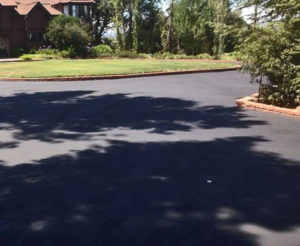
 If you live in Santa Rosa, you’ve probably noticed that your asphalt driveway doesn’t seem to hold up as long as you’d expect. Even when it looks freshly paved, cracks and potholes can sneak in faster than you anticipated. This isn’t just your imagination—or a fluke.
Our team at Sikes Asphalt Group, Inc. has been repairing driveways across Bennett Valley, Fountaingrove, and Rincon Valley for years, and we can tell you with confidence: Santa Rosa’s unique combination of environmental factors, infrastructure history, and land conditions takes a real toll on asphalt.
Let’s break down why your Santa Rosa driveway needs asphalt repair more often than you might think.
Key Takeaways
- Santa Rosa driveways face shifting soils from seismic activity, especially in hillside areas like Skyhawk and Montecito Heights.
- Heavy winter rains and poor drainage cause base erosion and cracks, especially near creeks and sloped driveways.
- Heat, UV rays, wildfires, and tree roots all break down asphalt faster in neighborhoods with older or exposed driveways.
- Local repairs help prevent deeper damage and save money over time for homeowners dealing with Santa Rosa conditions.
Shifting Soils From Sonoma County’s Seismic Activity
Santa Rosa sits in an active seismic zone, with faults like the Rodgers Creek Fault running directly beneath the city.
Even small tremors that most people don’t feel can slowly shift the soil underneath driveways—especially in hillside neighborhoods like Skyhawk and Montecito Heights. This ground movement causes stress cracks in asphalt, weakening the surface over time.
Unlike concrete, asphalt is more flexible but still prone to damage from repeated soil shifts.
If your driveway in Sonoma was built without reinforced sublayers, it’s even more vulnerable.
Seasonal Rain Patterns Create Expansion and Erosion
While Santa Rosa averages around 30 inches of rainfall annually, most of that comes in short, intense bursts during winter. Areas like West Santa Rosa and the Lower Brush Creek corridor are especially prone to drainage issues.
When water seeps into asphalt cracks, it causes the base layers to erode or expand, depending on how saturated the soil becomes. This repeated wetting and drying cycle leads to alligator cracking, potholes, and crumbling edges.
Homes along slopes or near creeks experience this faster due to water runoff pooling at the lowest points of the driveway.
UV Exposure Accelerates Surface Breakdown
Santa Rosa may be cooler than much of inland California, but the sun is still intense—especially during dry summers in areas like Larkfield-Wikiup and Roseland.
Prolonged UV exposure breaks down the asphalt’s binding oils, making the surface brittle.
When this happens, small surface cracks begin to appear, and without regular sealcoating, those cracks grow into deeper structural issues. We see this all the time in open, south-facing driveways that have no shade from trees or structures.
Older Driveways Lack Modern Installation Standards
A large number of homes in Santa Rosa were built before the 1990s, particularly in neighborhoods like Junior College and Proctor Terrace.
Here’s a quick comparison of old versus modern asphalt driveways we see across Santa Rosa:
| Features | Pre-1990 Driveways | Modern Driveways |
| Asphalt thickness | ~2 inches | 3–4 inches |
| Subgrade compaction | Often minimal | Engineered and compacted base layers |
| Drainage planning | Rare or poor | Integrated with slope and grading |
| Vehicle load expectation | Sedans and light trucks | SUVs, RVs, commercial deliveries |
Wildfire-Related Wear and Emergency Response Damage
After the 2017 Tubbs Fire and subsequent wildfire events, many Santa Rosa driveways—particularly in Coffey Park and Mark West—suffered heat-related damage or heavy equipment wear from emergency vehicles and cleanup crews.
Asphalt softens at high temperatures, and during fire events, ambient temperatures combined with direct flame exposure can weaken the surface structure.
Even years later, these driveways may not have been properly restored, leading to chronic cracking and premature failure.
Tree Root Intrusion in Mature Neighborhoods
Mature trees are a staple of Santa Rosa’s established areas, like McDonald Avenue and Montgomery Village, but their roots are a hidden enemy to driveways. Oaks, redwoods, and sycamores all have root systems that can lift and crack asphalt from below.
Even if the roots aren’t directly under the driveway, they often grow toward moist areas—like the soil beneath paved surfaces.
Over time, this pressure forces up the asphalt and causes uneven surfaces or cracking that require spot repairs or full removal.
Don’t Let Small Driveway Damage Turn Into Big Problems
Commercial asphalt issues in Santa Rosa are structural and ongoing.
At Sikes Asphalt Group, Inc., we specialize in identifying early warning signs and delivering long-lasting driveway repairs across Santa Rosa—from Oakmont to Hidden Valley and everywhere in between. Whether you need patching, resurfacing, or full-depth replacement, we’ve got the experience and equipment to get it done right.
Schedule a driveway assessment with us today so you can stop patching the same problems every year and start enjoying a smoother, safer surface that’s built to last.
Frequently Asked Questions
How long does a typical asphalt driveway last in Santa Rosa?
Most asphalt driveways in Santa Rosa last 15 to 20 years, but local soil and weather conditions often shorten that lifespan without routine maintenance like sealcoating and crack filling.
Can you resurface a driveway instead of replacing it entirely?
Yes, if the base is still solid, we can resurface your driveway with a fresh asphalt layer to restore appearance and performance without full removal.
What is the best time of year to schedule asphalt driveway repairs in Santa Rosa?
Late spring through early fall is ideal, when the weather is warm and dry enough for asphalt to cure properly and avoid rain-related delays.
Do you offer driveway grading and drainage improvements during asphalt repair?
Yes, we often regrade and install drainage solutions during repairs to prevent future water damage, especially in low-lying areas like West Santa Rosa.